

Helping Healthcare Systems Talk to Each Other
Cerner EHR, now under Oracle Health, is a widely used platform that serves as the central repository for patient data, clinical workflows, and operational records, and it delivers the most value when it integrates cleanly with analytics, mobile applications, billing tools, and patient portals. At Coditude, we focus on practical Cerner EHR integrations that cut out manual data entry, reduce friction across systems, and ensure the right data reaches the right people at the right time using standards like FHIR and HL7 for secure and reliable exchange.
We go beyond system-to-system connectivity by immersing ourselves in daily clinical and staff workflows, then designing integrations that keep those workflows running smoothly across real-time lab results, patient histories, appointment data, and treatment plans. We start with a detailed analysis of your current Cerner setup and integration goals, then design, build, and validate integrations that meet clinical and operational needs without disrupting care.
From Assessment to Integration Blueprint
First, we look very deeply at the usage of Cerner in your organization, the systems you want to connect, and the data that flows between them by mapping out key workflows like scheduling, clinical documentation, lab results, billing, and reporting. Knowing exactly how you operate, we identify the most efficient integration approach, whether that's FHIR APIs, HL7 interfaces, or a hybrid, and define the initial data mappings and workflows so there are no surprises later. We then create a pilot integration and test it in a safe environment to validate data flow, performance, and compliance before anything goes live.
From Pilot to Wide-Scale Rollout
Once the pilot is deemed stable and valuable, we support expansion across more departments, systems, and use cases, including new data types, mobile applications, or analytics platforms. We also create reusable patterns and documentation, so future Cerner integrations are faster to deploy, and help manage any governance or compliance steps like internal reviews or stakeholder sign-off as part of the rollout. The phased approach keeps risk in check while expanding the benefits across your organization.




Unlock Full Potential of Cerner
Real-world use cases

01. Patient App Integration
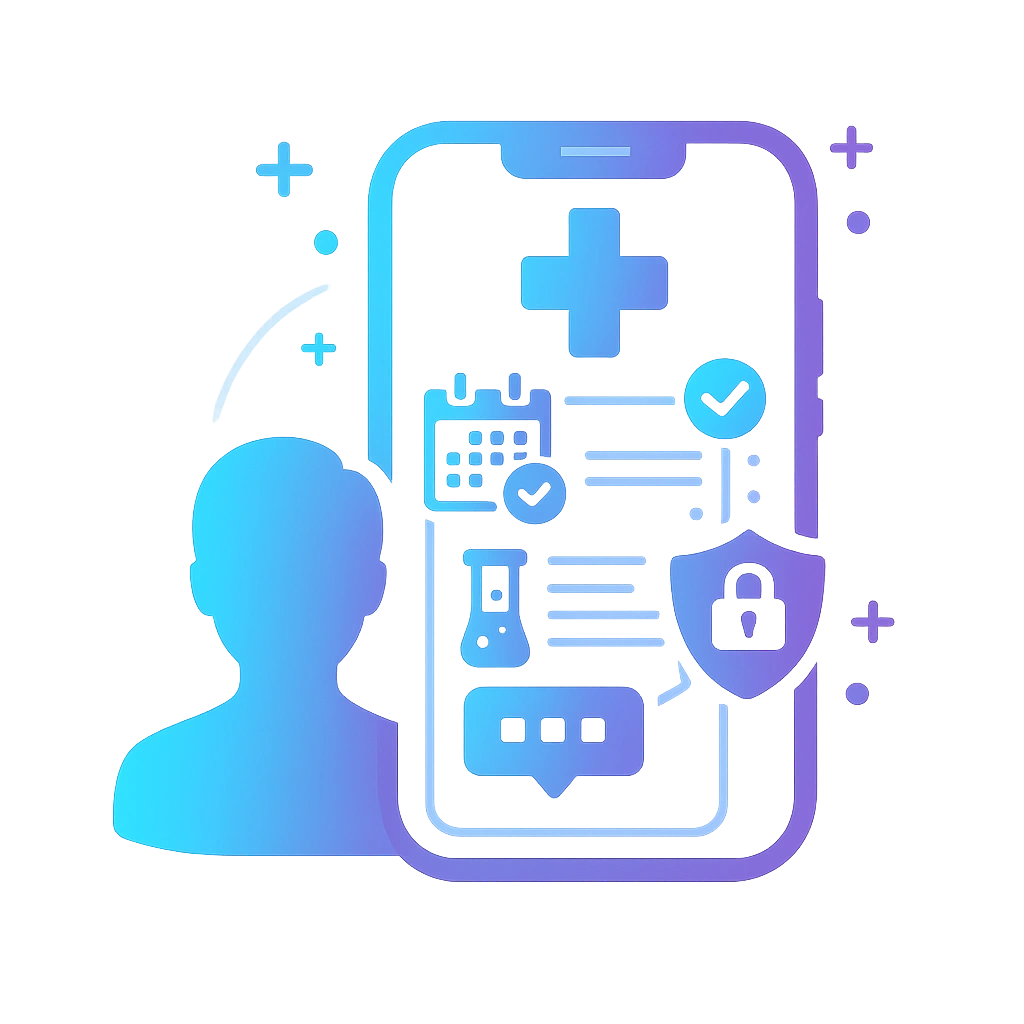
Integrate Cerner into mobile or web applications to enable patients to view records, schedule appointments, review test results, and communicate with care teams securely.

02. Clinical workflow automation
Help automate the administrative burdens for staff by enabling Cerner to share information with referral networks, care coordination tools, and clinical support systems.

03. Integration of billing and revenue cycle
Improve the accuracy and speed of billing workflows by ensuring that financial systems sync reliably with Cerner's clinical and scheduling data.

04. Healthcare analytics enablement
Brilliant data from Cerner to reporting and analytics to drive better decisions of leaders and clinicians with up to date, unified data.
Our Approach
Thinking workflow
We always start by understanding the teams day to day work. Thus, integrations support the existing routines to reduce the friction and help people get their jobs done.
Standards over Shortcuts
Instead of custom one-off integrations, we build on top of FHIR and HL7 standards. This way, integrations are more reliable, easier to maintain, and future proof.
Security and Compliance Built In
HIPAA, access control, audit logs, these have been considered from day one and are not bolted on later.
Tested before Go Live
We check every integration end to end for accuracy, performance, and security before it is ever used in production.
Continuous Optimization
We will monitor performance and refine it as systems evolve through Cerner upgrades, new data sources, or changing workflows after it is live.
Why choose Coditude?
A Trusted Partner for Cerner Integration
By connecting Cerner EHR, we enable healthcare teams to perform their work in a more efficient and less stressful way.
Controlled Delivery
Through assessment, pilot, standardization, and gradual rollout local teams remain in control of the process at every stage.
Interoperability Expertise
Our goal is true interoperability in the real world, not only technical connectivity, and this is achieved through industry standards and best practices.
Long Term Integrations
We build our integration solutions in a manner that they will be stable, extensible, and continue to be easy to manage when your needs grow.
Healthcare Focused Approach
We base everything on clinical workflows, compliance requirements and operational realities.
FAQs
The pilot phase is usually around 6-8 weeks. The time for broader rollouts depends on the number of systems and the complexity of workflows.
We implement FHIR and HL7 APIs for data exchange that is both secure and reliable
Yes. Cerner supports bidirectional data exchange, which means data can flow both into Cerner and out to connected systems.
Absolutely, Cerner can be integrated with analytics tools, mobile apps, billing systems, and other enterprise platforms.
Coditude is available for support, monitoring, and continual optimization to keep your integrations